Smart Tube Manufacturing Machinery: 5 Game-Changing Innovations You Need in 2025

Are you concerned that your current tube production methods are becoming obsolete? Relying on older machinery often leads to lower efficiency, inconsistent quality, and rising operational costs, making it difficult to compete. Adopting smart manufacturing innovations is crucial for securing your profitability and market leadership in 2025.
The most impactful innovations for 2025 are the integration of AI for predictive analytics, advanced automation technologies, IoT solutions, energy optimization methods, and advanced materials for durable machinery.
You might be thinking these technologies sound more at home in a tech company than on a tube mill floor. However, I’ve spent over 15 years in this industry, and I can tell you that these advancements are incredibly practical. They are designed to solve the real-world challenges you face every day, from unexpected downtime to material waste. Let’s explore how these five innovations can directly boost your production quality and bottom line.
The conversation around manufacturing has fundamentally shifted. We've moved from the era of basic mechanization to the dawn of Industry 4.0 and data-driven manufacturing1, where data is as valuable as steel. In my early days at XZS, decisions were based on experience and operator intuition. Today, at our 20,000 m² smart factory, we see how data-driven decisions, powered by the technologies we'll discuss, are transforming possibilities. This isn't just about upgrading a single machine; it's about upgrading your entire production philosophy to be more resilient, efficient, and intelligent. It’s a change I’ve witnessed firsthand, and it’s one that holds immense potential for every tube producer.
Innovation 1: Integration of AI and Machine Learning in Tube Manufacturing
Struggling with unplanned downtime due to sudden equipment failures? These unexpected stops throw your entire production schedule into chaos, leading to missed deadlines and expensive, reactive repairs. AI-powered predictive maintenance2 analyzes machine data to forecast failures, allowing you to schedule service before a breakdown ever occurs.
Artificial intelligence and machine learning are integrated into tube manufacturing primarily through predictive maintenance algorithms that analyze sensor data to forecast equipment failures. This enables proactive repairs, optimizes welding parameters in real-time, and automates quality control, significantly reducing downtime and improving product consistency.
The term "Artificial Intelligence" can seem intimidating, perhaps better suited for a data science lab than a steel processing plant. I've encountered this skepticism from clients before, but I've also seen the moment of conversion when they witness its practical power. I recall a client in Brazil, a major producer of automotive exhaust systems, who was plagued by inconsistent weld seam quality. Their experienced operators did their best, but subtle variations in material and ambient conditions led to a high rejection rate on a key contract. They were losing money and facing pressure from their customer. Their traditional quality checks were clearly not enough, and they were hesitant to invest in what they saw as unproven "high-tech" solutions. We explained that AI isn't about replacing skilled workers but empowering them with tools that see what the human eye cannot. It’s about turning the vast amount of data your machines already generate into actionable, preventive insights. This is the bridge from reactive problem-solving to proactive, intelligent manufacturing, and it’s more accessible than ever. The PLC and touch-screen controls on our modern XZS lines are built precisely to be the foundation for this data-gathering and AI-driven optimization.

Predictive Maintenance: From Reactive to Proactive
For decades, the standard approach to maintenance in our industry was reactive. A machine runs until a component fails, the entire line halts, and a maintenance team scrambles to diagnose and fix the issue. This model is incredibly inefficient. The direct costs of emergency repairs are high, but the indirect costs from lost production time, delayed orders, and potential damage to other machine parts are often far greater. It's a stressful, unpredictable way to operate, where your production schedule is at the mercy of the next unexpected breakdown.
Predictive maintenance, powered by AI, completely flips this script. We embed sensors throughout our tube mills—monitoring vibration, motor temperature, roller pressure, and power consumption. These sensors constantly stream data to a central AI model. The AI learns the normal operating signature of the machine. It doesn't just look for a single reading that is out of spec; it analyzes complex patterns across thousands of data points to detect subtle anomalies that are precursors to failure.
Imagine this scenario: the AI model detects a 0.5% increase in vibration and a corresponding 1°C rise in temperature in a specific gearbox on the forming section, a pattern that its algorithm has correlated with bearing wear. It then predicts a 90% probability of bearing failure within the next 120 operating hours. The system automatically alerts the plant manager via their dashboard and email, recommending a replacement. The manager can then order the part and schedule the 30-minute replacement during the next planned coil change, avoiding what would have been 4-5 hours of unscheduled emergency downtime. This is the practical power of AI. Industry data supports this; a recent study by Deloitte found that predictive maintenance can slash machinery downtime by up to 50% and reduce overall maintenance costs by as much as 40%.
AI-Driven Quality Control and Process Optimization
Traditional quality control often relies on periodic manual inspections or offline sample testing. An operator might check a section of a tube every 30 minutes. While essential, this method is inherently limited. A defect could occur and persist for hundreds of meters before it’s caught, resulting in significant material scrap. For high-spec applications like automotive or heat exchangers, where 100% integrity is required, spot-checking is simply not reliable enough.
AI-driven quality control automates and perfects this process. High-resolution cameras and eddy current sensors are installed directly on the line, scanning every millimeter of the tube's weld seam in real-time. The data is fed into an AI vision system that has been trained to identify a vast library of potential defects, from microscopic pinholes and incomplete fusion to subtle surface blemishes. It works tirelessly, at the full speed of production, with a level of accuracy and consistency that a human inspector cannot match over an 8-hour shift.
Crucially, the system doesn't just flag defects—it actively works to prevent them. This is where process optimization comes in. If the AI detects a slight drift in weld quality, it can instantly communicate with the mill's PLC. It might minutely adjust the high-frequency welder's power output or trigger a micro-adjustment in the squeeze rollers to correct the deviation before it becomes a defect. This closed-loop feedback system is key to achieving the near-perfect material utilization rates—up to 98%—that we engineer into our XZS machines. I saw this firsthand with a client in India's sanitary-ware industry. Their scrap rate from weld inconsistencies was hovering around 7%. After integrating an AI quality control module with their existing line, that rate plummeted to under 1.5% within three months, saving them thousands of dollars per week in wasted stainless steel.
Machine Learning for Optimizing Tooling and Changeovers
Setting up a tube mill for a new product run—changing the diameter and wall thickness—is a highly skilled task. It requires an experienced operator to meticulously adjust dozens of forming and sizing rollers. A small error in setup can lead to improper tube formation, weld defects, and significant scrap material at the beginning of a run. This process is time-consuming and heavily reliant on the tacit knowledge of a few senior technicians.
Machine learning offers a powerful solution to streamline this process. Over time, the system collects and analyzes data from hundreds of successful changeovers performed on the machine. It learns the precise relationships between tube specifications (diameter, thickness, material grade) and the optimal settings for every roller, guide, and welder parameter. This knowledge is captured and codified, no longer dependent on a single individual.
In practice, when a new job is entered into the system, the machine learning model instantly calculates and displays the ideal setup parameters on the HMI touch-screen. The operator is guided through the process, with the system showing the exact adjustments needed for each station. In fully automated lines, the system can even execute these changes itself, using servo motors to position the rollers with digital precision. This directly enhances our "Quick-change tooling" feature, transforming it from a mechanical convenience into an intelligent, data-driven process. The result is dramatically faster changeovers, minimal startup scrap, and the ability for less experienced operators to achieve perfect setups every time.
| Metric | Manual Changeover | ML-Assisted Changeover | Improvement |
|---|---|---|---|
| Average Time | 2-4 hours | 20-45 minutes | ~80% Reduction |
| Startup Scrap | 10-30 meters | < 5 meters | ~75% Reduction |
| Required Skill | High (Senior Operator) | Low (Guided by HMI) | Lowers Training Barrier |
| Consistency | Variable | Highly Repeatable | Ensures Quality |
Innovation 2: Advances in Automation for Enhanced Efficiency
Are you finding that manual labor for repetitive tasks is creating production bottlenecks and safety hazards? This reliance on manual intervention slows down your entire line, inflates labor costs, and exposes your valuable team members to potential injuries. Advanced automation addresses this by handling tasks from material loading to packaging with superior speed and precision.
Advanced automation enhances efficiency through fully integrated production lines, where robotic systems manage material handling, and automated controls oversee processes like welding, cutting, and stacking. This minimizes reliance on manual labor, reduces human error, and facilitates continuous, high-speed operation for maximum output.
When I talk about automation, I’m not just referring to the core functions of the tube mill itself. True efficiency comes from seeing the entire production line as a single, cohesive system. I remember visiting a client's large furniture factory in Southeast Asia a few years ago. They had just installed one of our high-speed XZS precision tube mills and were thrilled with its output rate. The problem was, their downstream processes—cutting to length, deburring, and stacking—were still entirely manual. The mill was producing tubes so quickly that a bottleneck formed immediately after the cutting station. Piles of tubes were accumulating on the floor, waiting for workers to manually carry them to the next stage. Their new, highly efficient machine was being throttled by their old, inefficient workflow. This experience was a powerful lesson: investing in a state-of-the-art mill is only half the solution. To unlock its full potential, you must embrace end-to-end automation, creating a seamless flow from raw coil to finished, packaged product3. This holistic approach is what separates good producers from great ones.

From Coil to Cut: The Fully Automated Production Line
The concept of a truly "lights-out" production cell is no longer theoretical in the tube industry. A fully automated line orchestrates the entire process flow with minimal human intervention4. It begins with an automated coil car that loads a multi-ton steel coil onto the uncoiler. The strip is then fed through the forming, welding, and sizing sections, all managed by a central PLC that synchronizes the speed and parameters of every component. Instead of a traditional friction saw, a high-speed, servo-driven cold saw or laser cutter makes precise, burr-free cuts on the fly, programmed directly from the main HMI.
This level of integration is the heart of modern efficiency. It’s not a collection of standalone machines but a single, intelligent system. Every part communicates with every other part. The uncoiler knows when the coil is about to run out and signals the coil car to prepare the next one, minimizing changeover time. The cutter knows the exact speed of the line to ensure every tube is cut to a tolerance of less than a millimeter. This synchronized operation allows for continuous, 24/7 production capabilities. Based on data from our clients, we've seen that these fully integrated lines can increase overall throughput by 30-40% compared to semi-automated lines that require manual intervention at key stages.
A prime example is a manufacturer of building materials in the US, a client of ours that produces structural tubing. They run three shifts, and their biggest challenge was the downtime and inconsistency between shifts. By investing in a fully automated XZS heavy-duty tube mill line, complete with automated coil handling and a flying cold saw, they were able to achieve a consistent output rate around the clock, regardless of which operator team was on duty. The automation didn't replace their staff; it elevated their roles from manual laborers to system overseers.
Robotic Integration in Material Handling and Post-Processing
Some of the most dangerous and physically demanding jobs in a tube plant occur "off the mill"—in material handling and post-processing. Manually loading heavy coils, transferring long sections of cut tube, and bundling finished products are all tasks that carry a high risk of injury and are notoriously inefficient. This is where robotic integration provides a transformative impact on both safety and productivity5.
We now commonly integrate six-axis robotic arms at multiple points in the production line. A heavy-payload robot can manage the entire coil loading sequence. Further down the line, another robot can pick up freshly cut tubes from the run-out table and place them perfectly into a jig for secondary operations or directly onto a polishing machine, like our XZS automatic tube polishers. ly, a third robot can handle the final stacking, bundling, and strapping, creating neat, secure packages ready for shipment. This is especially critical for producers of large-diameter industrial pipes. I recently worked with a client in the Middle East that supplies pipelines for the oil and gas sector. The manual handling of their heavy, 12-meter-long pipes was slow, required a large crew, and was a major safety concern. We helped them design a system where a gantry robot, synchronized with their XZS large-diameter mill, lifted, transported, and stacked the pipes. The solution not only eliminated a major safety hazard but also increased the line's overall output speed by 25%.
This integration of robotics goes beyond simple pick-and-place. With modern vision systems, a robot can perform quality checks, such as verifying tube length or straightness, before stacking. It ensures that only good products are packaged, providing a final layer of quality assurance. The result is a safer, faster, and smarter factory floor.
The Economic Impact of Automated Quick-Change Systems
For producers who need to manufacture a variety of tube sizes, the time spent on changeovers is a critical performance metric. A traditional, manual changeover, where operators must physically unbolt, replace, and recalibrate every set of forming and sizing rollers, can take anywhere from four to eight hours, depending on the complexity of the mill. During this entire period, your multi-million dollar asset is sitting idle, producing nothing.
Automated quick-change systems, a key feature we've pioneered at XZS, directly attack this source of lost revenue. Instead of individual rollers, the system utilizes pre-calibrated cassettes or rafts. When a changeover is initiated from the control panel, the automated system unclamps the entire raft of rollers, retracts it, and replaces it with the next pre-staged raft for the new size. The entire mechanical swap can be completed in under 30 minutes.
The economic impact is staggering. Let's consider a conservative example. If a manual changeover takes 4 hours and an automated one takes 30 minutes, you save 3.5 hours of production time. If your line generates $1,000 in value per hour, that's $3,500 saved per changeover. For a business that does three changeovers a week, that amounts to over half a million dollars in reclaimed production value annually. This calculation doesn't even include the savings from reduced labor and the elimination of startup scrap, as the automated system's precision ensures the first tube is a good one.
| Feature | Manual Changeover | Automated Quick-Change | Annual Impact (3 changes/week) |
|---|---|---|---|
| Downtime per Change | 4 hours | 0.5 hours | +546 hours of production time |
| Labor Required | 2-3 operators | 1 supervisor | -3000+ man-hours |
| Setup Accuracy | Operator-dependent | Digitally precise | ~95% reduction in startup scrap |
| Opportunity Cost | High | Low | ~$500,000+ in reclaimed value |
Innovation 3: Implementation of IoT for Real-Time Monitoring and Control
Are you effectively "flying blind," only discovering production problems like material defects or machine malfunctions long after they've occurred? This reactive approach leads to unacceptable levels of wasted material, jeopardizes delivery schedules, and can damage your reputation with customers. The Internet of Things (IoT) provides a live, transparent view of your entire production line, accessible from anywhere at any time.
The Internet of Things (IoT) in tube machinery involves embedding a network of smart sensors that collect and transmit real-time data on machine health, production status, and operating parameters. This enables remote monitoring, centralized control dashboards, and data-driven decision-making for management through industrial IoT solutions.
If we think of AI as the brain of a smart factory and automation as the muscle, then the Internet of Things (IoT) is the central nervous system. It’s the network that connects everything, constantly gathering information and enabling intelligent action. It bridges the physical world of the factory floor with the digital world of data and analytics using Industry 4.0 technologies6. The power of this is something I experienced personally and profoundly a while back. I was attending the Tube Düsseldorf trade fair in Germany, presenting our latest XZS machinery. In the middle of a conversation, I received a push notification on my smartphone. It was an automated alert from a client's IoT-enabled tube mill in the United States. The alert wasn't critical, but it warned that the pressure in the welder's closed-loop cooling system had dropped by 5%, suggesting a minor leak or a pump issue. The plant manager in the US received the same alert. From his desktop, he was able to view the live data, confirm the trend, and dispatch a technician to make a simple adjustment. A problem that could have escalated into an overheated welder and a major shutdown was resolved in minutes, without me or the manager ever having to be physically beside the machine. That's the tangible power of IoT: it makes your entire operation visible and controllable, from anywhere in the world.

The Digital Twin: Simulating and Optimizing Production
One of the most powerful applications of IoT data is the creation of a "Digital Twin7." This is a dynamic, virtual replica of your physical tube mill that lives in the cloud. It's not just a static 3D model; it's a simulation environment that is continuously updated with real-time performance data from the IoT sensors on the actual machine. This digital replica behaves, performs, and even "ages" exactly like its physical counterpart. The value of this is immense, and it’s a core component of the R&D we conduct in our advanced simulation labs at XZS.
The Digital Twin allows you to move beyond trial-and-error on the factory floor. Before running a new, complex tube profile, you can first simulate the entire production run in the virtual environment. You can test different roller configurations, welding parameters, and line speeds to find the optimal setup, all without wasting a single inch of steel or a minute of production time. If the simulation predicts a potential issue, like excessive stress on a particular forming stand, you can resolve it digitally before it becomes a real-world problem.
Furthermore, it's an unparalleled training tool. New operators can learn to run the mill, practice changeover procedures, and even respond to simulated emergency scenarios in the virtual world, gaining valuable experience in a completely safe and cost-free environment. Consulting firm Accenture has reported that companies effectively utilizing digital twins can see improvements in operational efficiency of up to 25% and reductions in product defects by a similar margin. It transforms your operational strategy from reactive to predictive and optimized.
Centralized Dashboards and Remote Operations
In the past, managing a production floor meant walking the floor. A manager had to be physically present to check on machine status, review production counts, and talk to operators. This is no longer the case. IoT connectivity consolidates all the data from your machinery into a single, intuitive dashboard that can be accessed on a PC, tablet, or smartphone.
From this centralized dashboard, a plant manager can get a high-level overview of the entire factory at a glance: which lines are running, their current OEE (Overall Equipment Effectiveness), and any active alerts. They can then drill down into a specific machine to view detailed, real-time data: line speed, welder amperage, bearing temperatures, and raw material consumption. This immediate access to information enables faster, more informed decision-making. You can spot a drop in efficiency on Line 2 and investigate the cause instantly, rather than waiting for an end-of-shift report to show a problem.
This capability is a game-changer for businesses with multiple facilities, a common scenario for our clients who are building-material wholesalers or EPC contractors. A central operations team, perhaps located at the headquarters in Brazil, can monitor the real-time performance of their tube production lines at project sites in both Colombia and Argentina. They can ensure that quality standards and production schedules are being met across the entire enterprise without the cost and logistical complexity of having senior engineering staff physically present at every location. It provides a level of oversight and control that was previously unimaginable.
Supply Chain Integration and Data Transparency
The reach of IoT extends beyond the four walls of your factory. By connecting your machine's data to your enterprise resource planning (ERP) system8, you can create a truly transparent and responsive supply chain. This is where smart manufacturing delivers a powerful competitive advantage.
For instance, the IoT system on the tube mill precisely tracks the consumption of steel coils. By monitoring the weight and remaining length on the uncoiler, the system can automatically trigger a reorder request to your procurement department or even directly to your steel supplier when inventory falls below a pre-set threshold. This automates your raw material replenishment, preventing stock-outs that could shut down production and reducing the need to hold excessive, costly inventory.
This data transparency can also be extended to your customers. Imagine providing your key clients with a secure portal where they can see the real-time status of their specific order as it moves through your production line. They can see that the raw material has been allocated, the tubes have been formed and welded, and they are now in the final packaging stage. This level of transparency builds incredible trust and loyalty. It moves the conversation away from "Where is my order?" to a collaborative, informed partnership.
| Data Point | IoT Sensor/Source | Business Impact |
|---|---|---|
| Weld Temperature | Infrared Pyrometer | Prevents weld defects, reduces scrap, ensures product integrity. |
| Vibration Signature | Accelerometer | Enables predictive maintenance on motors/gearboxes, avoids downtime. |
| Coil Weight/Length | Load Cell / Encoder | Automates raw material inventory management and reordering. |
| Production Count | Laser Sensor | Provides real-time OEE data for performance tracking. |
| Energy Usage | Power Monitor | Identifies opportunities for energy savings and cost reduction. |
Innovation 4: Energy Optimization Techniques for Sustainable Production
Are rapidly increasing energy prices systematically eroding your profit margins? High energy consumption is not just a significant operational expense; in today's market, it's also an environmental liability that can tarnish your brand's reputation. Modern tube mills leverage innovative energy-saving technologies to dramatically reduce the amount of energy consumed per meter of tube produced.
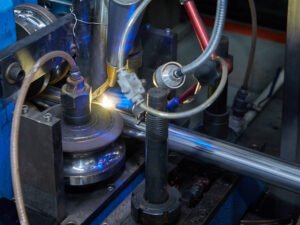
Energy optimization in modern tube machinery centers on using high-efficiency components, such as solid-state high-frequency welders, and implementing smart power-management controls. These systems intelligently power down idle components and optimize energy usage in real-time based on the immediate production load.
For many years, the primary metrics for a tube mill were speed and precision. Energy consumption was often seen as a fixed, unavoidable cost of doing business. That mindset has changed completely. Today, especially when I speak with clients from Europe and North America, questions about energy efficiency9 are just as common and critical as questions about tolerance and output. Sustainability is no longer a buzzword; it's a core business requirement. Major global brands in the automotive, furniture, and construction sectors now audit their suppliers' environmental footprint. Having a low-energy, sustainable operation can be the deciding factor in winning a major contract. This fundamental shift—from viewing energy as a simple cost to leveraging efficiency as a competitive advantage and a mark of corporate responsibility—is what drives the innovation in this crucial area. It's about being both economically and environmentally intelligent.

The Shift to Solid-State High-Frequency Welders
The single most energy-intensive component of a tube mill is the high-frequency induction welder, which can account for over 60% of the line's total power draw. For decades, the industry standard was the vacuum tube-based welder. While effective, these systems are notoriously inefficient. Much like an old incandescent light bulb, they generate a significant amount of waste heat, and their typical electrical efficiency often hovers around a mere 60-65%. This means that for every 100 kilowatts of power you pull from the grid, only about 65 kilowatts are actually being used to weld the tube.
The game-changer has been the development and adoption of modern, solid-state HF welders10, a standard feature on all our new XZS energy-saving lines. Instead of fragile vacuum tubes, these systems use robust, high-efficiency semiconductor technology. The latest generation achieves electrical efficiencies of 85% or higher. This 20-percentage-point difference is massive. It represents a direct reduction in wasted energy and heat, leading to significantly lower electricity bills.
Let's put that in financial terms. Consider a 400kW welder running two shifts a day. Switching from a 65% efficient vacuum tube unit to an 85% efficient solid-state unit can easily result in annual electricity savings of tens of thousands of dollars. Furthermore, solid-state welders have a higher power factor, which can reduce utility penalties, and they require less maintenance than their vacuum tube predecessors. The payback period on this technology is often surprisingly short, making it one of the most compelling upgrades for any tube producer.
Smart Power Management and Regenerative Systems
Beyond the welder itself, significant energy savings can be found by intelligently managing the power consumption of the entire line. In a traditional mill, all the drive motors—for the uncoiler, forming section, and sizing section—often continue to run even during short pauses in production, such as during a coil change or a brief stop for quality inspection. This idle time consumes a substantial amount of energy for no productive purpose.
Modern tube mills, equipped with our advanced PLC controls, implement smart power management. The central controller monitors the status of the entire line. If it detects a stop longer than a few seconds, it automatically places non-essential motors and auxiliary systems like hydraulic pumps into a low-power "sleep" mode. Power is restored instantly when the operator restarts the line. This simple, intelligent logic can cut the line's non-productive energy consumption by over 70%.
We are also beginning to implement regenerative braking systems, a technology borrowed from electric vehicles11. When a long, heavy production line needs to decelerate, a massive amount of kinetic energy has to be dissipated, usually as heat through braking resistors. A regenerative system captures a portion of this kinetic energy, converting it back into electricity with the motors acting as temporary generators. This captured energy is then fed back into the machine's local power circuit, reducing the overall draw from the grid. For lines that frequently start and stop, this can result in measurable energy savings over time.
Analyzing Energy Consumption Data for Continuous Improvement
You cannot manage what you do not measure. The same IoT sensor network that enables predictive maintenance and quality control is also a powerful tool for energy optimization. By placing granular power monitors on key subsystems—the main drives, the welder, the cooling systems, the cutting unit—you can get a detailed, real-time map of exactly where your energy is going.
This data allows you to move beyond your monthly utility bill and analyze consumption with surgical precision. Our XZS control systems can generate reports that show you the energy consumed per meter of tube, per shift, or per specific product run. This allows you to establish a baseline and identify anomalies. For example, you might discover that a particular set of worn-out rollers is causing increased friction and forcing the drive motors to draw 10% more power. This data turns an invisible cost into an actionable maintenance insight.
I worked with a building-material wholesaler in the United States who upgraded their facility with one of our new heavy-duty tube mills featuring a comprehensive energy monitoring package. By analyzing the data over the first six months, they identified and rectified several inefficiencies in their workflow and cooling system settings. Combined with the efficiency of the solid-state welder, they reported a 22% reduction in the line's total electricity consumption, achieving a full return on their investment in the energy management system in just under three years.
| Energy Cost Component | Standard (Old) Technology | Advanced (New) Technology | Annual Savings Example (400kW Line) |
|---|---|---|---|
| Welding Power Source | Vacuum Tube Welder (~65% eff.) | Solid-State Welder (>85% eff.) | $25,000 - $35,000 |
| Main Drive Motors | Run continuously | Smart Power-Down Mode | $5,000 - $8,000 |
| Line Deceleration | Friction Braking (Waste Heat) | Regenerative Braking System | $2,000 - $4,000 |
| Data & Analytics | Monthly Utility Bill | Real-Time Subsystem Monitoring | Identifies ongoing savings opportunities |
Innovation 5: Development of Advanced Materials for Tube Machinery
Does your older tube mill struggle to hold tight tolerances over time due to frame flexing and component wear? This degradation leads to constant recalibration, expensive parts replacements, and ultimately, a shorter operational life for your entire production line. Machinery constructed from advanced alloys and precision-machined components provides superior rigidity and durability for long-term performance.
Advanced materials, such as high-strength treated steel alloys, are now used for machine frames, while specialized tool steels and coatings are used for critical wear components like rollers. This enhances the machinery's structural rigidity, wear resistance, and long-term stability, ensuring consistent precision.
Think about the difference between the chassis of a high-performance racing car and that of a standard family sedan. Both serve the same fundamental purpose, but one is engineered with advanced materials for extreme rigidity and durability under constant stress. The exact same principle applies to the construction of a world-class tube mill. The foundation of precision is stability. For years, I've emphasized to my clients that the initial investment in a machine built with superior materials and manufacturing processes pays for itself many times over. This is a core philosophy at XZS, reflected in our commitment to features like robust, CNC-machined frames. A machine that doesn't flex, warp, or wear prematurely is a machine that will reliably produce high-quality tubes for decades, not just a few years. It's the bedrock upon which all other innovations are built.

High-Strength Alloys and CNC Machining for Ultimate Frame Rigidity
The base of the tube mill is its single most important structural element. If the base flexes, even by a fraction of a millimeter under the immense stress of forming steel, every component mounted to it—the roller stands, the welding head, the sizing section—will move out of alignment. This is a primary cause of dimensional inconsistency in tube production. Older or lower-cost machines often use bases fabricated from multiple steel plates welded together. While strong, these welded structures contain internal stresses from the welding process and are susceptible to warping over time.
At XZS, we have moved beyond this method. Our machine bases are constructed from thick, high-strength alloy steel that has been heat-treated and stress-relieved to ensure maximum stability. More importantly, the critical mounting surfaces are finished using high-precision CNC machining centers12. This process guarantees that the entire frame is geometrically perfect, with a flatness and parallelism that is impossible to achieve with manual fabrication.
This robust, stable foundation is a non-negotiable prerequisite for achieving the kind of precision our clients demand. It is the reason we can confidently guarantee a production tolerance of ≤ ±0.05 mm. A rigid frame ensures that the alignment performed during installation remains true for years of heavy, continuous operation. It minimizes vibration, which not only improves tube quality but also extends the life of all other machine components. It is the unsung hero of precision manufacturing.
Advanced Coatings and Materials for Forming Rollers
The forming and sizing rollers are the only parts of the mill that directly contact the product. Their material composition and surface finish have a direct impact on both the rollers' lifespan and the quality of the finished tube. Using standard tool steels is acceptable for some applications, but high-volume or high-quality production demands more advanced solutions. The constant friction and pressure cause these rollers to wear, leading to a loss of the precise profile needed to form the tube correctly.
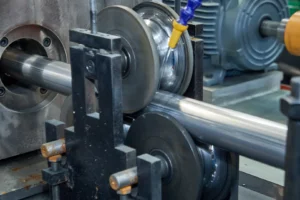
To combat this, we utilize superior materials like D2 tool steel and industrial hard chrome coatings13, which are known for their exceptional wear resistance in high-volume manufacturing environments. For even more demanding applications, such as producing thin-walled stainless steel for the decorative or sanitary-ware markets, we employ advanced surface treatments. Rollers can be coated with materials like Tungsten Carbide or industrial hard chrome. These coatings create an incredibly hard, low-friction surface.
This delivers two key benefits. First, the rollers last significantly longer, reducing the frequency of replacement and the associated costs and downtime. Second, the ultra-smooth surface imparts a superior finish on the tube, free from the microscopic scratches and scuff marks that can be caused by softer, rougher rollers. I had a client, a producer of high-polish furniture tubes in Europe, who was constantly battling with this exact issue. By retrofitting their line with a set of our XZS rollers with a specialized chrome coating, they completely eliminated the scratching problem. This small change elevated the aesthetic quality of their product, allowing them to command a higher price in their market.
The Impact of Material Science on Maintenance and Lifespan
When you combine a highly stable, CNC-machined frame with wear-resistant rollers and other hardened components, you fundamentally change the machine's maintenance profile and overall lifespan. The choice of materials directly translates into tangible, long-term financial benefits for the owner. A machine built to a higher standard simply requires less intervention and lasts longer.
The superior wear resistance of advanced tooling means that maintenance intervals can be extended. Instead of re-shimming and recalibrating the line every few months to compensate for wear, a machine built with high-quality materials will hold its alignment for much longer periods. This means more uptime and more production. It also reduces the inventory of spare parts you need to keep on hand, freeing up capital.
Ultimately, a well-built machine is a long-term asset, not a short-term expense. A tube mill constructed with advanced materials and manufacturing techniques is designed to perform to its original specifications for 15, 20, or even more years. A lighter-duty, fabricated machine might be cheaper initially, but it will likely require major overhauls or complete replacement in less than a decade. Investing in superior material science at the outset ensures a lower total cost of ownership and a more reliable and profitable production future.
| Component | Standard Material | Advanced Material (XZS) | Key Benefit |
|---|---|---|---|
| Machine Base | Welded Steel Plate | Heat-Treated, CNC-Machined Alloy | Maintains long-term alignment and precision. |
| Forming Rollers | Standard Tool Steel | D2 Tool Steel w/ Hard Chrome Coating | 3-5x longer life, superior tube surface finish. |
| Drive Shafts | Standard Carbon Steel | Induction-Hardened Alloy Steel | Higher torque capacity, resistance to fatigue. |
| Gearbox | Cast Iron Housing | Ductile Iron Housing | Greater shock resistance and durability. |
Conclusion
Embracing the five key innovations of AI, advanced automation, IoT connectivity, energy optimization, and superior material science is no longer optional. For tube manufacturers aiming to lead the market in 2025, integrating this smart technology is the definitive path to achieving higher precision, greater efficiency, and sustained profitability.
-
Understand why data-driven strategies are now central to advanced manufacturing plants. ↩
-
Learn how predictive maintenance with AI reduces downtime and saves costs in factories. ↩
-
Discover the benefits and structure of seamless, fully automated production lines ↩
-
Find out how lights-out manufacturing transforms plant productivity ↩
-
Understand how robotics reduce workplace risks and optimize throughput in heavy industry ↩
-
See how Industry 4.0 combines IoT, AI, and automation for factory floor digitalization. ↩
-
Discover the definition and use cases of digital twins, especially for optimizing production. ↩
-
Understand the benefits of linking IoT data to ERP for seamless supply chain integration. ↩
-
Discover regional regulations and buyer trends driving demand for energy-efficient production ↩
-
Explore technical details and real-world results comparing solid-state and vacuum tube welders ↩
-
Understand how regenerative systems recapture kinetic energy and lower electricity consumption ↩
-
See how CNC-machined surfaces enhance long-term accuracy and alignment for heavy-duty machinery ↩
-
Discover how advanced roller materials extend tooling lifespan and improve tube surface quality ↩

 English
  Русский