How to Read a Tube Mill Test Certificate (MTC): Ensuring Your Stainless Steel Tube Supplier Meets Spec
Received a shipment but unsure if the tubes meet spec? A bad batch can derail projects and ruin your reputation. Learning to read the MTC is your first line of defense.
Reading a Mill Test Certificate (MTC) involves methodically checking its key sections. You must verify the heat number for traceability, cross-reference the listed standards (e.g., ASTM) with your order, and confirm that the chemical composition and mechanical property results fall within the required specification ranges.
In my 15+ years in this industry, I've seen how a single piece of paper—the MTC—can be the difference between a successful production run and a costly failure. This document is a definitive assurance of quality, but only if you know how to interpret it correctly. Let's break down the process step-by-step, so you can evaluate any supplier's material with confidence.
What Are the Basics of a Tube Mill Test Certificate?
Confused by the jumble of codes and numbers on an MTC? This document can seem intimidating, but it holds vital information. I'll show you how to decode it simply.
A Mill Test Certificate (MTC), or MTR, is a quality assurance document issued by the material manufacturer. It certifies that the product's chemical and mechanical properties comply with specific standards and customer requirements, acting as a birth certificate for the metal.
Think of the MTC as the material's passport. It provides complete traceability from the original melt to the finished product you receive. For us at XZS, and for our clients in high-stakes sectors like automotive or oil and gas, this traceability is non-negotiable. The MTC serves as a legal document and a definitive assurance of compliance. Before diving into the technical data, you must first identify the basic administrative information.
Key Header Information
- Manufacturer’s Name: Confirms the origin of the material.
- Heat Number: This is the most critical code for traceability. It links the tube back to the specific batch of molten steel it came from.
- Lot/Batch Number: Identifies the specific production run the tube was a part of.
- Product Description: Details the material, including dimensions, grade (e.g., 304L), and finish.
Verifying this basic information is the essential first step to ensure you're looking at the correct document for your shipment.
How Do You Identify Key Specifications and Standards in the MTC?
Your project requires a specific ASTM grade, but where is that on the MTC? Misinterpreting standards can lead to catastrophic failures. Let's find exactly what you need to look for.
Look for a section explicitly labeled "Specifications" or "Standards." This area will cite industry codes like ASTM A554 or EN 10217-7. You must cross-reference this code with your original purchase order to confirm an exact match is met.
This section is where the supplier formally declares which rulebook they followed. The global tube and pipe industry relies on these standards to guarantee consistency and safety. Increasing regulatory scrutiny and customer demands for reliability mean that adherence to these codes is more critical than ever. A mismatch here is an immediate red flag. For example, a tube certified to a decorative standard should never be used in a pressure application. My experience has shown that our most successful clients are meticulous about this check. At XZS, we design our intelligent welding-pipe production lines to produce tubes that consistently meet or exceed these stringent international benchmarks, because we know our customers' reputations depend on it.
| Standard | Common Application |
|---|---|
| ASTM A554 | Welded Stainless Steel Mechanical Tubing (Ornamental) |
| ASTM A269 | Seamless and Welded Austenitic Stainless Steel Tubing |
| EN 10217-7 | Welded steel tubes for pressure purposes |
| JIS G3446 | Stainless Steel Pipes for Machine and Structural Purposes |
How Do You Analyze the Chemical Composition and Mechanical Properties?
The numbers for Chromium and Nickel look right, but what about [tensile strength](#placeholder_4)[^4][^1]? A tube can have the right chemistry but fail under stress. Let's analyze the critical performance data.
Compare the listed percentages of key elements (e.g., Cr, Ni, Mo) against the required standard's range. Then, check the mechanical test results—tensile strength, yield strength, and elongation—to ensure they meet or exceed the specified minimums for the grade.
This is the heart of the MTC—the raw data that proves the material's integrity. Getting this right is fundamental to the performance of the final product, whether it's an automotive exhaust or a heat exchanger. The data is typically split into two main sections.
Chemical Analysis: The Material's DNA
Here, you'll see a list of chemical elements and their measured percentages. For a 304 stainless steel tube, you'll be looking for Chromium (Cr) around 18% and Nickel (Ni) around 8%. These elements provide the corrosion resistance and toughness the material is known for. A value outside the standard's acceptable range, even by a small fraction, can compromise the tube's performance in its intended environment.
Mechanical Properties: The Material's Strength
This section shows how the material behaved under physical tests.
- Tensile Strength: The maximum stress the material can withstand before breaking.
- Yield Strength: The stress at which the material begins to deform permanently.
- Elongation: How much the material can stretch before it fractures, indicating its ductility.
I've seen projects fail because the material was too brittle (low elongation) for a bending application, even though the chemistry was "correct." Both chemistry and mechanics must be right.
How Do You Verify Compliance with Industry Standards and Specifications?
The MTC says it's compliant, but can you trust it? Forging documents is a real risk in this industry. Let's discuss how to truly verify the claims on paper.
True verification involves a three-way check: the data on the MTC, the requirements of the cited standard (e.g., ASTM A554), and your original purchase order specifications. All three must align perfectly. Any discrepancy is a major red flag.
Never take an MTC at face value. A trustworthy supplier will provide a document that stands up to scrutiny. Here's the process I teach my team: First, pull up the official document for the standard cited (e.g., from the ASTM or ISO website). Second, compare the acceptable ranges listed in the standard to the actual results printed on the MTC. Do the chemical and mechanical values fall within the required limits? Third, check both against your purchase order to ensure the grade, dimensions, and specifications are exactly what you requested. For highly critical applications, such as in the oil-and-gas sector, we often advise our clients to take it a step further. You have the right to take a sample from the delivered batch and send it to an independent, third-party lab for verification. A reliable partner will support this level of due diligence; it fosters trust and demonstrates their confidence in their own quality control.
How Can You Confirm a Supplier's Quality Assurance and Certification Processes?
An MTC looks good, but what about the company behind it? A certificate is only as reliable as the supplier who issues it. Let's evaluate the source of your material.
Look for evidence of a robust Quality Management System (QMS), such as an ISO 9001 certification number, on the MTC or accompanying documents. A reputable supplier will have transparent, traceable processes and welcome questions about their quality control procedures.
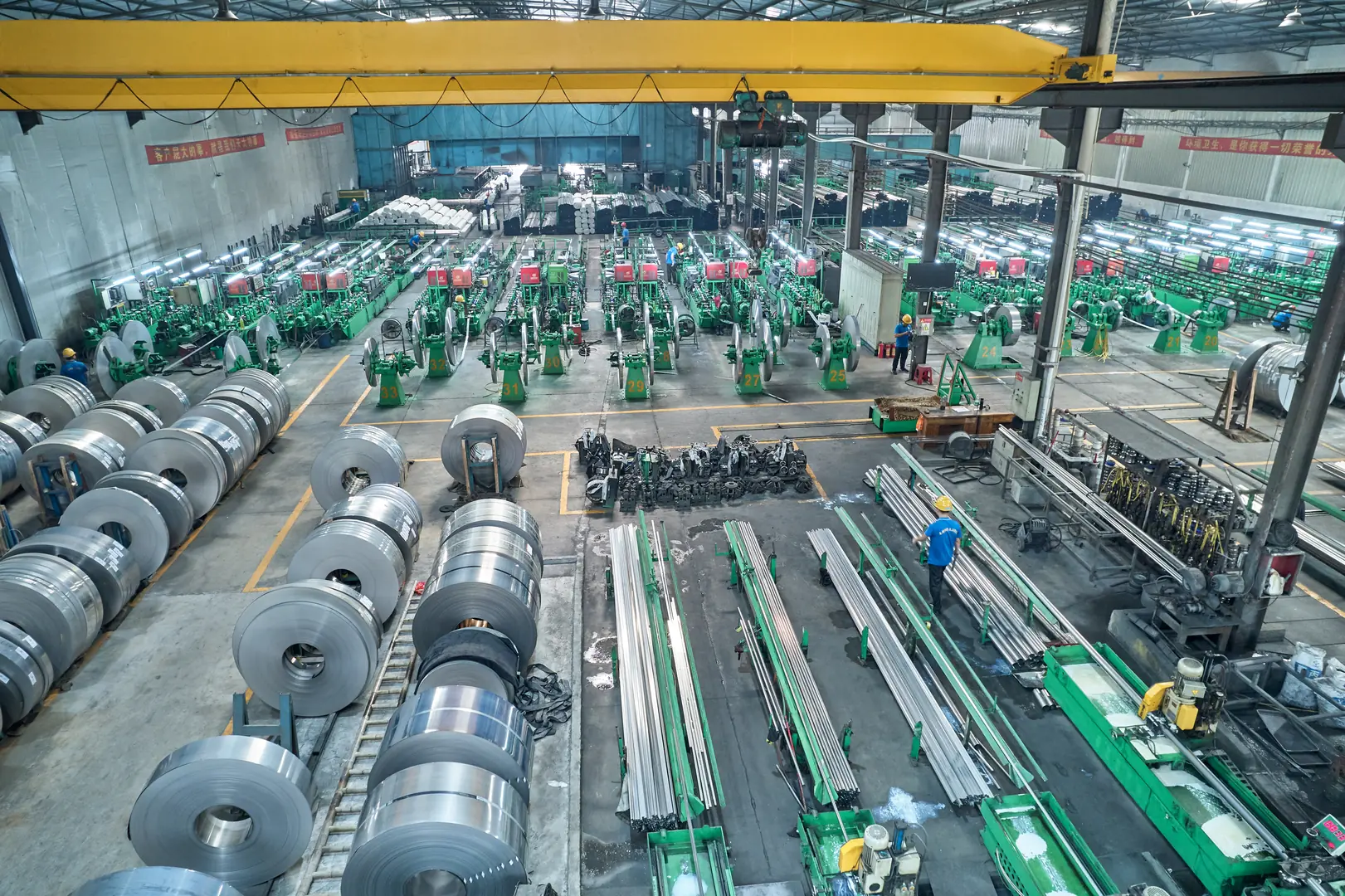
The MTC is a product of a supplier's entire quality system. A certificate from a company with a weak or non-existent quality management process is not worth the paper it's printed on. This is why, at XZS, we proudly state our ISO 9001 certification. It isn't just a badge; it's our documented commitment to a system of continuous improvement, rigorous checks, and complete traceability. Our 20,000 m² smart factory and advanced CNC machining capabilities don't just build tube mills—they build trust. The precision of our machines (delivering tolerance ≤ ±0.05 mm) is a direct result of our own obsession with quality control. When you choose a machinery partner like us, you're not just buying equipment; you're investing in a philosophy of quality that extends to your own products. A strong supplier helps you produce tubes with MTCs that your customers can trust without hesitation.
Conclusion
The MTC is more than a piece of paper; it's your primary tool for risk management and quality assurance. Mastering its interpretation protects your investment, your reputation, and your final product's integrity. This ensures you get exactly the quality and performance you paid for every single time.




 English
  Русский